
In this in-depth guide, you’ll find everything you need to know about babysitting costs in Denmark, from teenage sitters to professional nannies. We’ll break down the average hourly rates, how much to pay based on age, experience, and location, and how extra tasks can impact the rate. Real-life calculation examples and helpful tips.
According to internal data from platforms like Sitly, the average hourly rate for childcare in 2026 is around 60 DKK. This typically covers young people under 18 who provide informal care during their free time or in the evenings. That said, rates can vary quite a bit, from under 50 DKK to over 100 DKK per hour, depending on age, experience and the scope of the tasks involved.
Who you hire makes a big difference:
- A nanny works regularly and is usually responsible for young children, cooking, or school pick-ups. Nannies are typically over 18, earn between 80 and 120 DKK per hour, and a written agreement is often set up with salary reported to SKAT.
- A babysitter is usually a teenager or student who looks after children occasionally, for example in the evenings, without a permanent contract. The typical rate is 50–70 DKK per hour.
There’s no set minimum wage for childcare in Denmark, but hourly pay usually depends on a few factors, first and foremost the babysitter’s age. To give you a clearer picture, we’ve put together a guide to hourly rates in Copenhagen, based on babysitter profiles on Sitly.dk. The figures reflect average requirements and offers in 2026.
| Age / type | Indicative hourly rate (DKK) |
|---|---|
| Under 16 years | 50–70 |
| 16–18 years | 60–90 |
| 18–20 years | 80–120 |
| 20–25 years | 100–140 |
| Over 25 years | 130–160+ |
Hourly pay vs. a fixed babysitting rate: what’s more common?
Most babysitters are paid by the hour, especially for occasional or flexible care. It’s the fairest way to match pay with time and effort. That said, for regular shifts, or evenings when the children are already asleep, some families and babysitters agree on a fixed price instead.
Here’s how to choose between the two:
- Hourly pay works best in flexible situations, when hours vary, tasks change, or you need care at short notice. Paying by the hour (or part of an hour) ensures the babysitter is fairly compensated for any changes or extra work.
- A fixed rate works well for set times, for example, regular evening care where the tasks are clear and both sides have agreed in advance what’s included. It’s easier to budget for and cuts down on coordination.
If you go with a fixed rate, keep this in mind:
- Agree clearly on what it covers (number of children, tasks, travel time, and so on).
- Make sure it doesn’t underpay the babysitter if the work ends up more demanding than expected.
- Consider a small bonus if unexpected tasks or a longer shift come up.
For example, a babysitter might agree to a flat rate of 300 DKK for a 5-hour evening shift where the children are already asleep and there’s nothing extra to do. But if they need to arrive earlier, cook dinner, or stay later, it’s fair to top that up with an hourly rate.
How experience and qualifications affect babysitter pay
A babysitter’s knowledge and experience have a real impact on what they can reasonably charge, and it’s not just about age.
A 20-year-old student with a background in early childhood education will naturally command a higher rate. Equally, even a 15-year-old with solid hands-on experience can reasonably ask for more than the minimum. In general, the more experienced or qualified a babysitter is, the higher their expected hourly rate. As a parent, it comes down to what feels right for you:
Are you comfortable hiring someone newer to babysitting at a lower rate while they build experience? Or would you rather pay a bit more for the peace of mind that comes with experience? There’s no right or wrong answer here. What matters most is that the arrangement feels fair to both of you.
What tasks does your babysitter have?
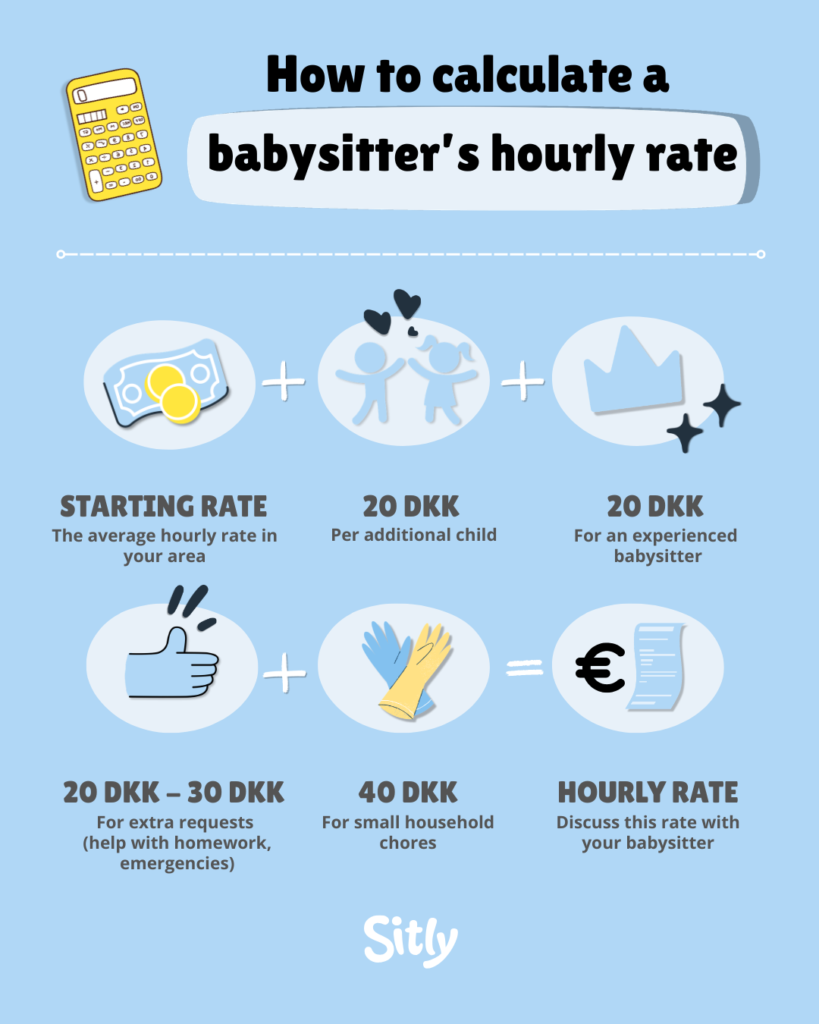
A babysitter’s hourly rate depends not only on age and experience, but also on what tasks you expect them to do. Asking your babysitter to take on extra responsibilities can significantly affect the rate. For example:
- If she’s looking after multiple children at once, expect a higher hourly rate.
- Do your children need a lot of attention, or have special needs? Then a higher rate is perfectly reasonable.
Try the Sitly calculator to instantly see babysitting prices in your area. Just enter your city, the babysitter’s duties, and the number of children, and get an average price right away.
Example: babysitter, 18 years old, 3 children, cooks dinner
Sarah is 18 and has extensive experience in childcare. She’s just started a teacher training course and is certified in paediatric first aid.
She looks after three children once a week, aged 8, 5, and 3. She arrives at 2:00 PM, picks up the two oldest and the youngest, and brings them all home for snacks and play. If the weather’s nice, she takes them to a nearby farm on the family cargo bike. The parents also appreciate that she makes dinner, so they can all eat together once they’re home around 5:30 PM.
What’s a fair rate for Sarah?
- 70 DKK/h (typical minimum for an 18-year-old babysitter)
- +30 DKK/h (for two extra children)
- +10 DKK/h (for experience and the first aid course)
= 110 DKK/hour
Total payment: 110 DKK × 3.5 hours = 385 DKK. Since Sarah also cooks dinner, the family decides to round it up to a fixed 400 DKK.
Babies vs. older children: what does age mean for the rate?
The age of your children plays a big role in determining a fair babysitting rate. Caring for a baby or toddler takes constant attention and hands-on help; the babysitter needs to be fully present and engaged the whole time.
With children around 6 and up, care is typically easier: they can often eat on their own, use the bathroom independently, and entertain themselves for stretches, which means fewer hands-on tasks for the babysitter. The younger and more dependent the children, the more intensive the care required, and that should be reflected in the pay.
Light housekeeping and additional tasks
If you’d like your babysitter to help with small tasks around the house, it’s fair to compensate for that. Examples of tasks that may justify a higher hourly rate:
- Vacuuming the living room
- Emptying or filling the dishwasher
- Doing the laundry
- Washing dishes
- Preparing dinner
Note: A cleaning assistant in Denmark typically earns between 120 and 150 DKK per hour. If your babysitter also takes on household chores, it’s perfectly reasonable to pay extra for that.
Evening care vs. day care
Do you only need care in the evenings, or does the babysitter also need to pick the children up after school and look after them in the afternoon? Evening care is often paid at a lower hourly rate, especially if:
- The children are already asleep when the babysitter arrives.
- There’s very little active care involved (unless the children wake up, of course).
Daycare, on the other hand, often involves:
- Picking children up from school or daycare
- Preparing food
- Keeping an eye on play and activities
- Bath and bedtime routines
If the babysitter is active all afternoon and into the evening, it makes sense to pay more.
Tip: Some parents and babysitters choose to lower the hourly rate after 8 PM, once the children are typically asleep, or agree on an average rate to keep things simple for everyone.
Example: babysitter, 16 years old, 2 children, evening care
Lieke is 16 and in high school. She has over two years of regular experience looking after her younger brother and cousins. In her new babysitting family, she occasionally looks after two children on weekend evenings. When she arrives at 7:30 PM, the children are already asleep. She stays until 11:30 PM, and the parents drive her home afterwards. She’s given snacks and drinks along the way and asked to empty the dishwasher.
What’s a fair rate for Lieke?
- 36 DKK/h (typical minimum for a 16-year-old)
- +10 DKK/h (for responsibility for two children)
= 46 DKK/h
But since the children are already asleep and rarely wake up, Lieke and the parents agree on a fixed rate of 40 DKK/h instead.
Total payment: 40 DKK × 4 hours = 160 DKK. Lieke is very happy with this arrangement
Babysitter at short notice or “on-call”
Need a babysitter at short notice? That kind of flexibility comes at a small extra cost.
Last-minute bookings can mean the babysitter has to cancel their own plans or rearrange their day, especially if they’re a student. In these cases, it’s good practice to offer a slightly higher hourly rate. Quick availability is convenient for you, but it should also be recognised financially.
Example: babysitter, 21 years old, 1 child, afternoon care + lunch
Nienke is 21 and studying to become a teacher. She has a child first aid certificate and is going through a period with fewer teaching hours. Every Wednesday afternoon, she looks after a 6-year-old boy for a regular family. She picks him up from school at 12:00, has lunch with him, plays with him, and stays until his parents get home at 6:00 PM. The family provides food and encourages outdoor play. The boy is very active, so Nienke is engaged the whole time. Small expenses, like bus fare or snacks, are reimbursed.
What’s a fair rate for Nienke?
- 105 DKK/h (typical minimum for babysitters aged 21+)
- +5 DKK/h (for training and first aid certificate)
- +5 DKK/h (for active care and full attention)
= 115 DKK/h
Total payment: 115 DKK × 6 hours = 690 DKK. The family rounds it up to 700 DKK and provides lunch for Nienke.
How to talk about pay with your babysitter
Once you’ve settled on a fair hourly rate, the next step is talking to the babysitter about it. It’s normal if that feels a little awkward, but it’s better to be upfront from the start than risk misunderstandings later.
Tip: Ask the babysitter if they already have an idea of what they expect to earn. When you both come in with clear expectations and can explain your reasoning, it’s much easier to reach an agreement that feels fair to both of you.
Hourly rates for babysitters in Denmark
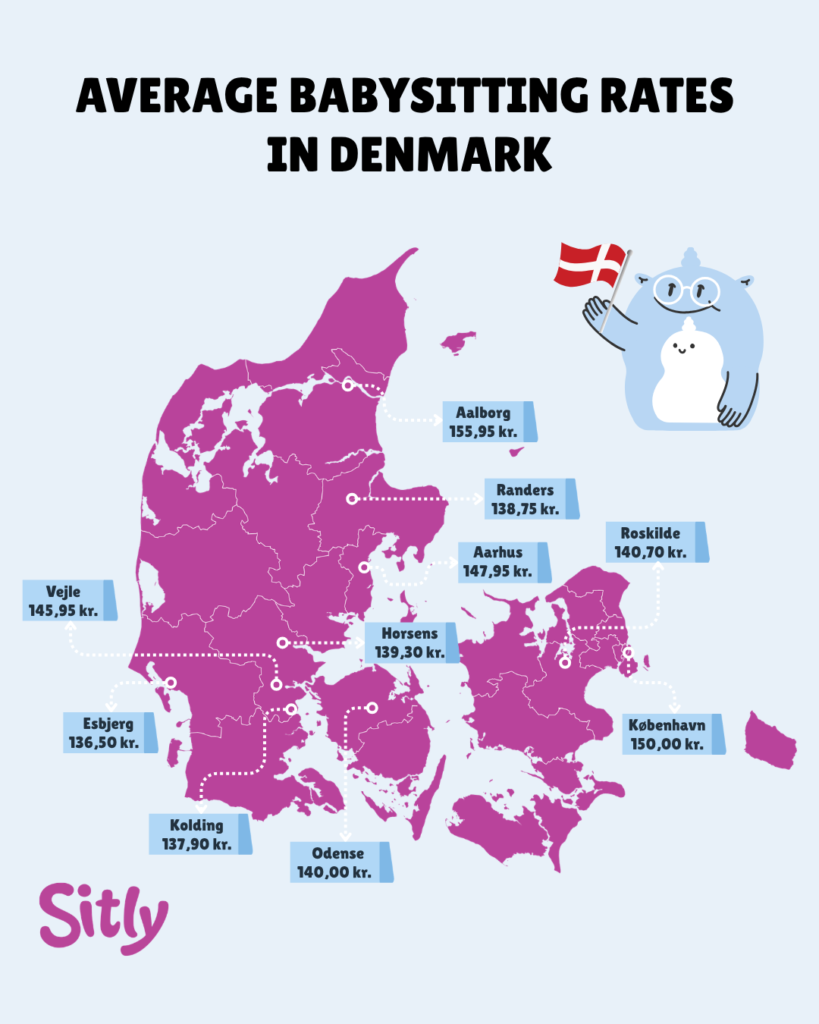
These figures are based on the average hourly rates listed in their profiles by the 13,800 babysitters on Sitly.
The figures clearly show that big cities like Copenhagen and Aalborg sit at the high end, with average hourly rates above DKK 150. This is likely due to higher demand, a higher cost of living, and more families with fixed incomes. In smaller cities like Esbjerg, Randers, and Kolding, prices are typically DKK 10–15 lower, reflecting both a generally lower price level and possibly more babysitters available relative to demand.
Where you live affects the price
When it comes to babysitting rates, geography matters a lot. Prices vary significantly between cities and regions, mainly due to supply and demand:
- In areas with many babysitters and fewer families, prices typically drop.
- In areas where many families need childcare but supply is low, prices rise.
That’s why it’s worth asking around in your local area what others pay. Talk to friends, neighbours, or other parents at daycare — this will give you a much clearer picture of what a fair hourly rate looks like where you live.
Average hourly wage for babysitters in Denmark: Table
| Town | Hourly wage |
|---|---|
| Aalborg | 155.95 kr. |
| Randers | 138.75 kr. |
| Aarhus | 147.95 kr. |
| Roskilde | 140.70 kr. |
| Copenhagen | 150.00 kr. |
| Odense | 140.00 kr. |
| Kolding | 137.90 kr. |
| Esbjerg | 136.50 kr. |
| Vejle | 145.95 kr. |
| Horsens | 139.30 kr. |
How much does a nanny cost?
Although the words babysitter and nanny are often used interchangeably, there are actually important differences, especially when it comes to experience, the scope of tasks… and what it will ultimately cost you.
A babysitter is typically a younger person, perhaps a high school or college student, who helps out occasionally: a weekend evening, a few hours after school, or in emergencies. It’s a loose, flexible arrangement, often without a contract or registration. In these cases, you pay by the hour (typically 50–90 DKK/h), only for the time you need. There are no extra costs like holiday pay or taxes.
It’s a different story if you need regular help, maybe three times a week, every morning, or with multiple tasks (cooking, helping with homework, looking after young children). Then you’re looking at a nanny: a more stable role, often with experience and perhaps a background in early childhood education or a child first aid course.
When the relationship becomes ongoing, it’s important to get the framework right, both for you and for them. This usually means:
- A written agreement, so everything is clear from the start
- Reporting salary to SKAT if they work for you on a regular basis
- Some additional costs to factor in as an employer
How much does a nanny really cost?
A nanny is entitled to:
- Holiday pay (typically 12.5% of salary)
- Perhaps a Christmas bonus or an extra allowance for special tasks
- Transport allowance or coverage of incidental expenses
- And, with many fixed hours, labour market contributions (AM-bidrag)
In short: if you pay 120 DKK per hour, the real cost could end up being 130–140 DKK/hour once everything’s included. It’s not a huge difference, but it’s good to know in advance, this way you avoid surprises, and your nanny feels appreciated for the responsibility they take on.
So what should you pay your babysitter?
There’s no single right answer when it comes to babysitting rates. It depends on a number of factors, including:
- The babysitter’s age, experience, and any qualifications
- The number of children, and their ages
- Whether the babysitter will also cook, tidy up, or help with other tasks
- Whether care is needed during the day or in the evening
- Where you live
- And, of course, your own budget
Ultimately, it’s about finding the right balance between fair pay and safe, affordable help for your family. What matters most is being open and honest. Talk to your babysitter about expectations, tasks, and pay, then together you can reach an agreement that feels fair to both of you.
.
Table of contents


FAQS

The average price for a babysitter in Copenhagen is 150–180 kroner per hour. In the city center and in areas with high demand, the price can increase to 200 kroner per hour, especially if the babysitter has references, a first aid course, or solid experience with infants.
A weekend babysitter usually costs 160–200 kroner per hour, as evening and weekend care is paid more than weekdays. If the babysitter stays overnight, a fixed price of 500–800 kroner per night is often agreed upon, depending on how much active care is required.
A babysitter usually costs between 120 and 160 kroner per hour, depending on experience, the age of the children, and where in the country you live. In Copenhagen and Aarhus, the average is typically 150–170 kroner per hour, while in smaller towns it is often 110–130 kroner.


Trusted sitters, right around the corner
Need a little help? Sitly connects you with experienced babysitters in your area. Whether you need occasional or regular care, finding the right babysitter is super easy. Browse profiles, read reviews, and reach out to your favorites right away.

Related Articles

Calculate Your Babysitter’s Rate with the Sitly Calculator
Find out how much to pay a babysitter in your area. Sitly’s Babysitter Rate Calculator shows average rates across Denmark and helps you estimate a fair hourly wage based on your city, number of children, and any extra duties. Get a clear and personalized indication of what families and babysitters usually agree on.

10 Ways to Help Your Child Overcome Fear of Monsters at Bedtime
If your child is afraid of monsters at bedtime, you’re not alone. Many kids aged 3 to 6 struggle with nighttime fears fueled by imagination and change. In this article, you’ll learn why these fears happen, how to validate them, and 10 simple, creative ways to help your child feel safe and sleep peacefully. From using nightlights and comforting routines to anti-monster sprays, magic spells, and stuffed animal bodyguards—each idea is designed to reduce anxiety and empower your child at night.

From What Age Can You Safely Leave Your Child Home Alone?
There’s no strict legal age for leaving a child home alone—it depends on maturity, safety, and context. This guide gives parents age-based recommendations, key safety rules, and preparation tips to help children become more independent at the right pace. Learn what your child should know before staying home alone, how to plan for emergencies, and how babysitters can support independence too.